Plot B · Soil moisture · 7 days31%
SteadyDevicesSoilPulse Probe
SoilPulse Probe.
The soil sensor for every farm.
Five readings from the soil, taken sector by sector on your own farm, and turned into advice on the phone you already own. Now in field trials in Ghana.
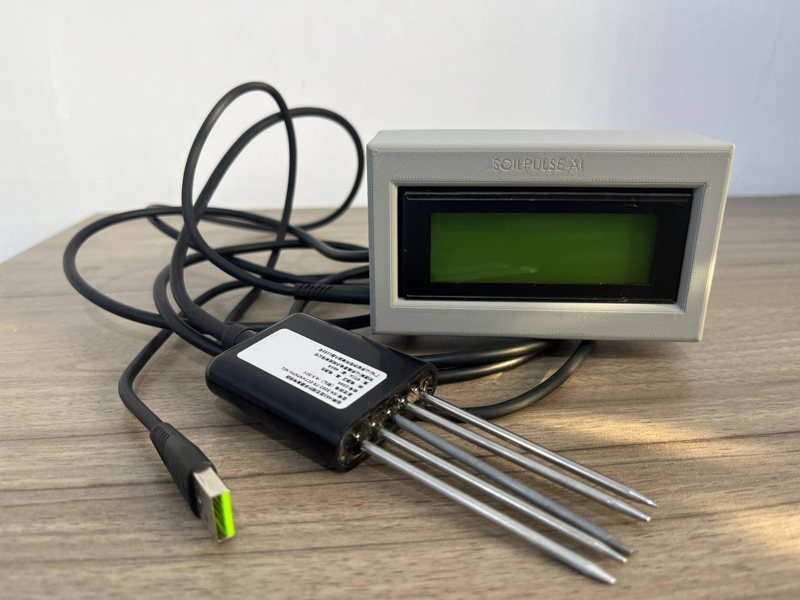
What it measures
Five readings.
One picture of your soil.
Together they show whether your soil has the water, the balance and the food your crop needs.
- Moisture
How much water the soil is holding, so you water before plants feel stress and spot beds that stay waterlogged.
- pH
How acidic the soil is. Below about 5.5, nutrients lock up and roots suffer, and lime brings it back.
- EC
Electrical conductivity: the dissolved salts and nutrients in the soil water. Too low means hungry soil, too high means salt build-up.
- Temperature
How warm the soil is, which drives germination, root growth and soil life. Mulch and cover crops keep it in check.
- NPK
Nitrogen, phosphorus and potassium, the three nutrients crops need most, followed as a trend through the season.
On the spot
Every reading, right there on the screen.
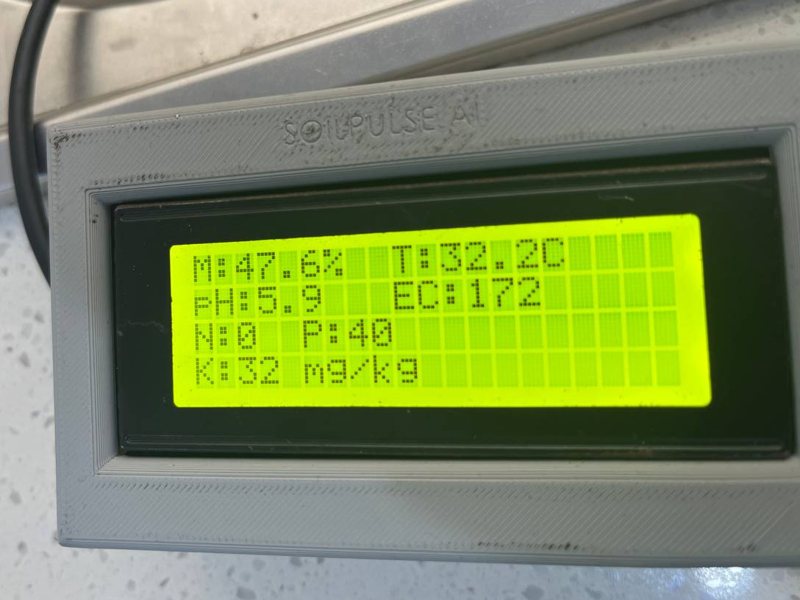
No waiting for a lab. Push the probe into the soil and moisture, temperature, pH, EC, nitrogen, phosphorus and potassium appear on the reader in seconds.
In 3D
Turn it over.
See every side.
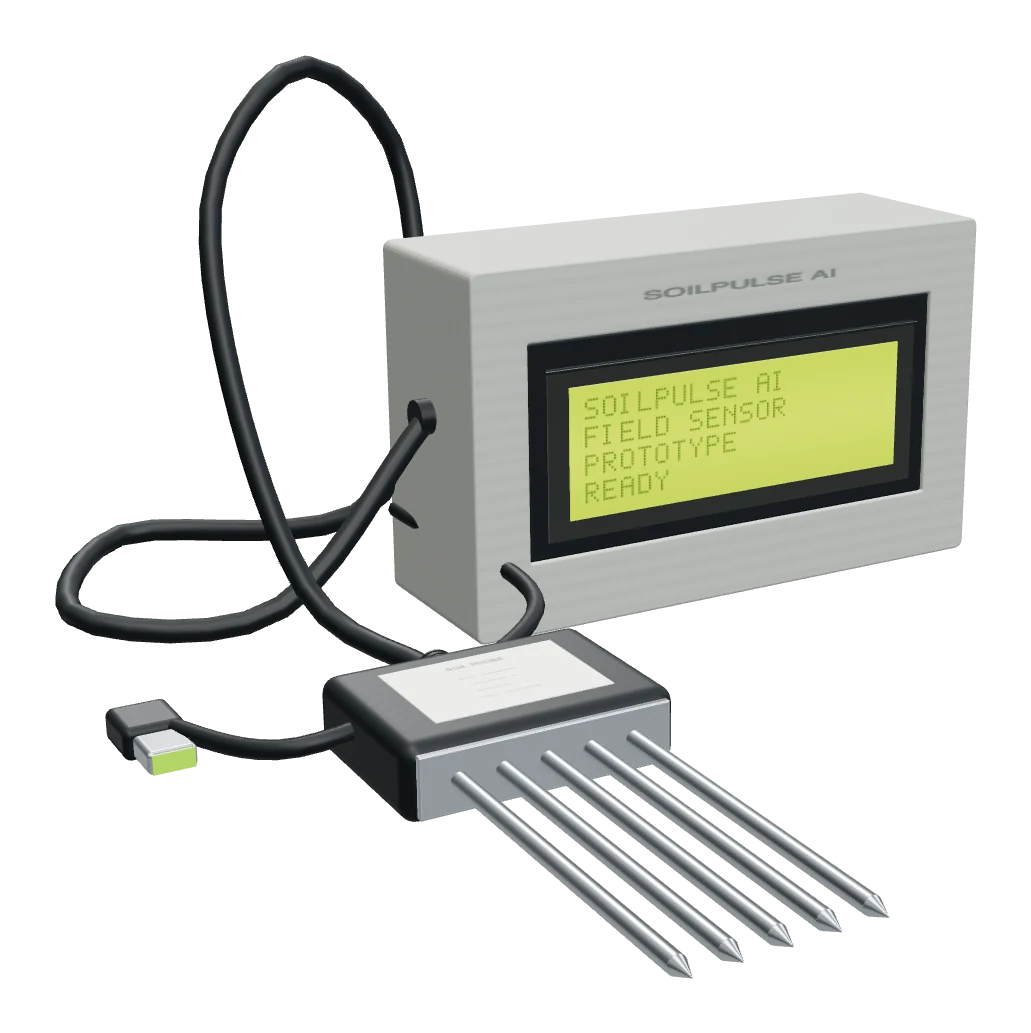
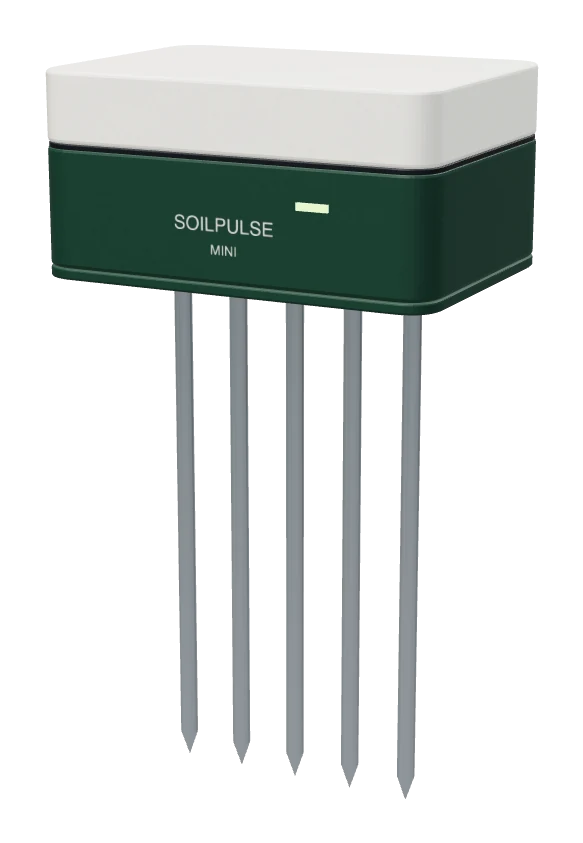
A 3D model of the field prototype, rebuilt from photographs. Proportions are approximate.
In the field
Tested where it matters.
-
In the field Pushed into the soil
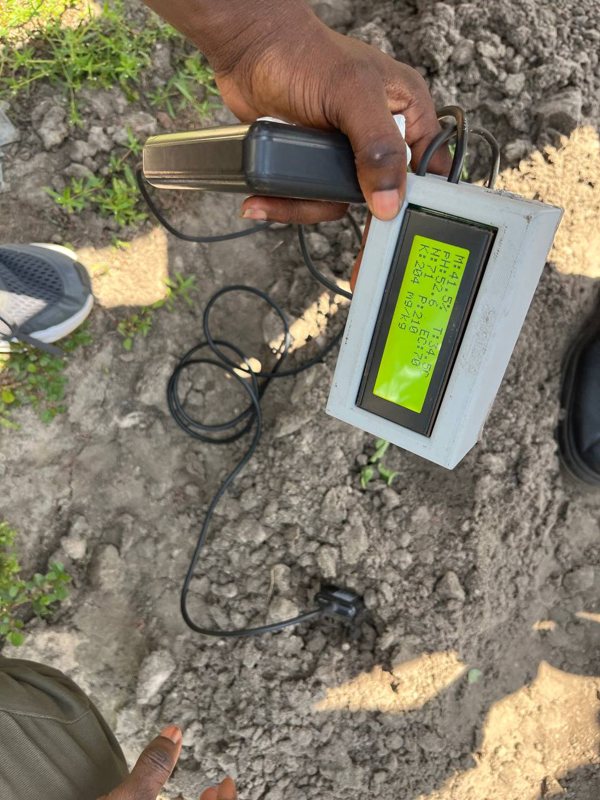
The probe goes straight into the ground and the reading appears on the screen in hand.
-
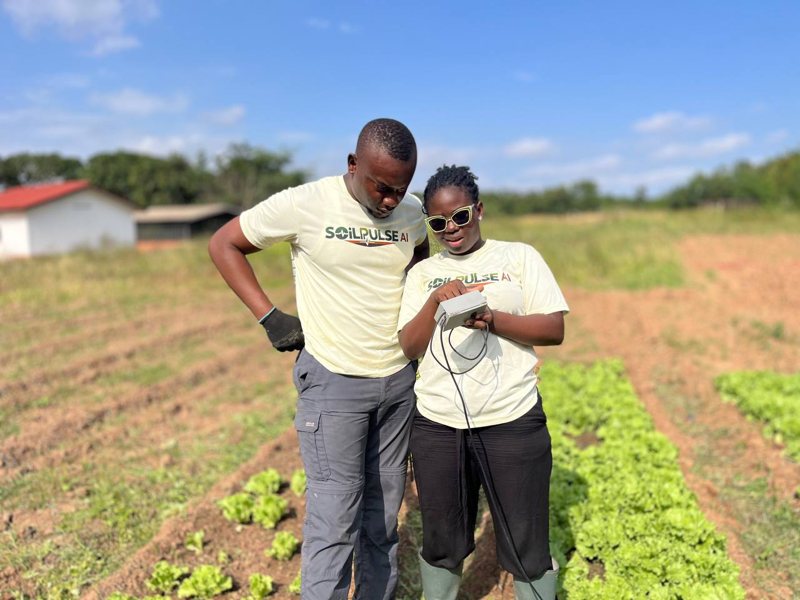
In the field Read together
Readings are taken with the farmer, so the numbers mean something from the start.
-
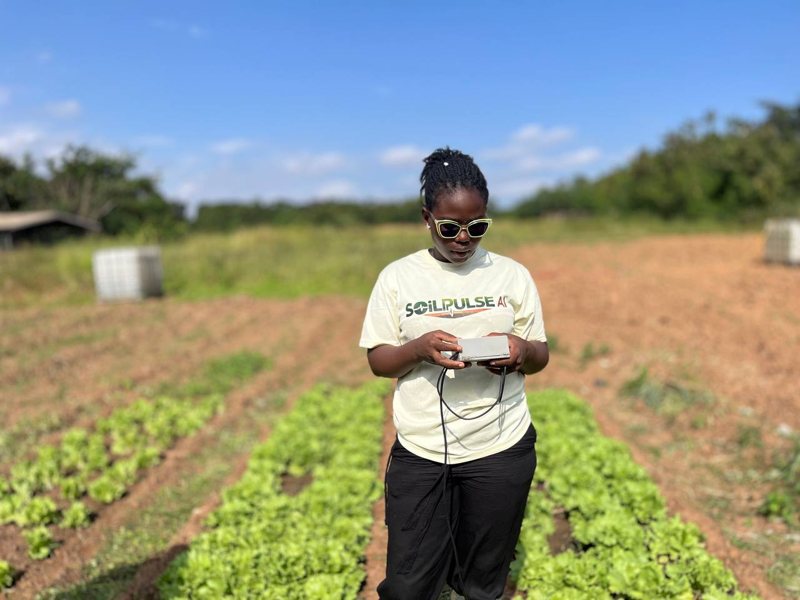
In the field Between the rows
One sector at a time, across the whole plot.
-
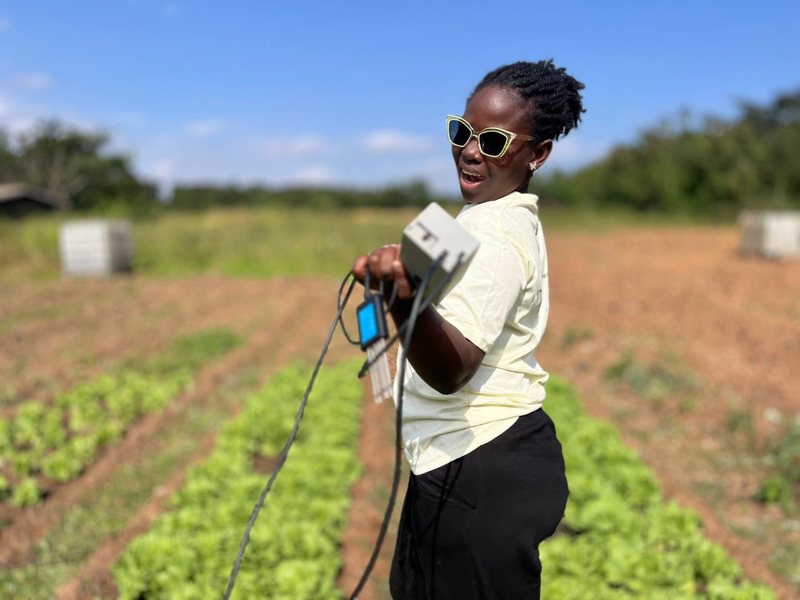
In the field Built to be carried
The reader and probe travel from bed to bed.
-
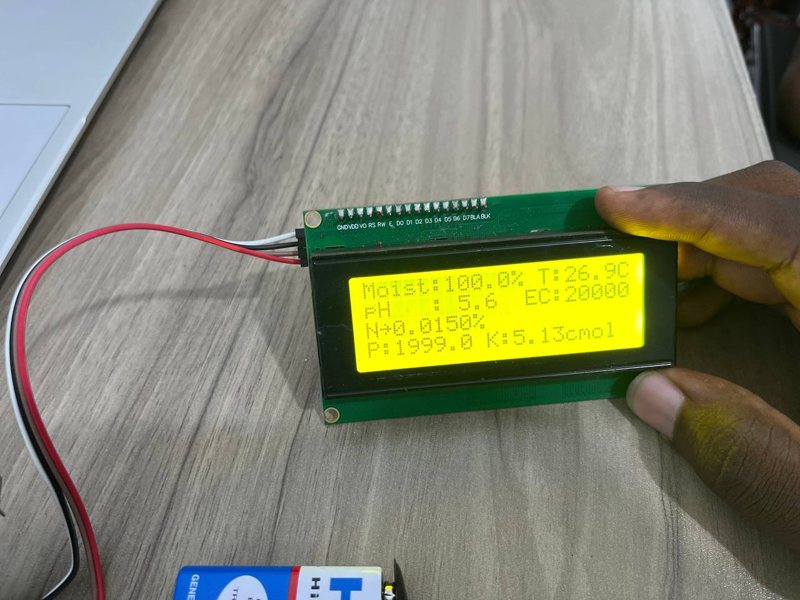
On the bench Where it started
An early prototype showing moisture, temperature, pH, EC and NPK on one screen.
How it works
From the soil to your phone.
The probe does the measuring. The app does the explaining.
- 01
Place it sector by sector
The probe goes into the soil in one sector of your farm at a time, so every reading belongs to the right patch of ground.
- 02
Read it on the spot
All five readings show on the reader’s screen in seconds, and are logged so change shows up as a trend.
- 03
Advice reaches your phone
Readings become your soil health score and plain advice, in your language, in the app or by SMS.
In the app
A trend, not a snapshot.
One reading can mislead. The same plot reads differently at dawn and in the afternoon, or the day after rain. Logging readings over time shows where your soil is heading before you act.
Part of the field kit
The soil, the crop and the plot, in one visit.
With our partner DeepLeaf, a single farm visit can combine Probe readings with a photo diagnosis of the crop and dated, geolocated images of the plot. A 360° camera is being added to the kit. The result is advice for the farmer and proof of where the crop was grown.
- Soil readingsMoisture, pH, EC, temperature and NPK from the SoilPulse Probe.
- Crop diagnosisDisease, pests and nutrient deficiency read from a photo by DeepLeaf.
- Images of the plotDated and geolocated, captured on the same visit.
- One recordAdvice for the farmer, and evidence for buyers who need to know where cocoa came from.
At a glance
SoilPulse Probe.
- Measures
- Soil moisture, pH, electrical conductivity (EC), temperature, and nitrogen, phosphorus and potassium (NPK)
- Probe
- Five stainless steel sensing rods in a sealed housing, pushed straight into the soil
- Reader
- A built-in screen that shows every reading on the spot
- Connection
- Probe wired to the reader, with a USB lead
- Advice
- In the SoilPulse app, and by SMS
- Languages
- English, Twi, Ewe, Ga and Hausa
- Stage
- Prototype. Two units are in field trials on a farm in Ghana
Backed by research
Tested on working farms.
Every reading is checked against agronomic ranges for the crop and returned to the farmer as advice. Read how we measure and what we study.
- 2Probes in field trials
- 5Readings per probe
- 1Farm
- 2Regions
Field trials
Bring the Probe to your farm.
We are working with a small number of farms during field trials. Tell us about yours.